
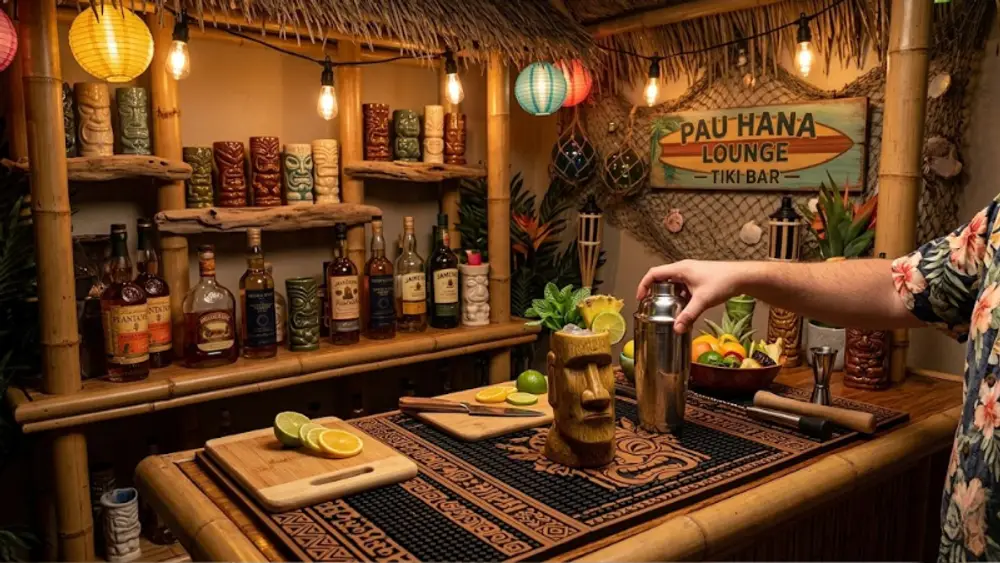
There’s something about a tiki bar that changes the energy of a room — or a backyard. The bamboo textures, the tropical colors, the sound of ice cracking in a shaker full of rum. Whether you’re converting a patio corner, a garage wall, or an entire outdoor space, setting up a tiki bar at home is one of the most rewarding entertaining projects you can take on.
This guide covers everything from essential equipment and decor to the drinks you should know how to make (with full measurements for five tiki party classics), a short history of tiki drinks, and how to keep your tiki bar functional and protected from spills and weather.
What Makes a Tiki Bar Different from a Regular Home Bar?
A tiki bar isn’t just a regular bar with a few palm trees stuck on top. It’s a specific aesthetic and experience rooted in mid-century Polynesian-inspired cocktail culture. The key differences:
- The vibe is the point. A tiki bar is immersive. The decor, the glassware, the drinks — everything contributes to the atmosphere. A regular home bar can be minimalist; a tiki bar is maximalist by design.
- Rum is king. Where a standard home bar might center around whiskey or gin, a tiki bar revolves around rum — multiple types, blended and layered in complex cocktails.
- Outdoor-friendly. Tiki bars are often partially or fully outdoors, which means your equipment and surfaces need to handle sun, humidity, and occasional rain.
- Themed glassware and garnishes. Tiki mugs, ceramic bowls, flaming garnishes, and elaborate fruit arrangements are part of the experience, not optional extras.
Essential Tiki Bar Equipment
Before you start shopping for bamboo and string lights, nail the functional basics. You need your bar to actually work before you make it look good.
The Bar Surface
Your bar top takes the most abuse — especially in an outdoor setting. Rum cocktails are sticky, fruit juices stain, and condensation from tiki mugs pools fast. A Tiki Bar Mat is essential here — it protects your bar surface, catches every drip, and fits the tiki theme perfectly.
For the bar top itself, consider materials that handle moisture well: sealed bamboo, marine-grade plywood with a polyurethane finish, or tile. Avoid raw wood unless you want to refinish it every season.
Core Tools
Tiki cocktails are more complex than your average G&T. You’ll need:
- A large cocktail shaker — tiki drinks use more ingredients and more ice than standard cocktails. Go bigger than you think you need.
- A blender — for frozen drinks like Piña Coladas and blended Mai Tais. A commercial-grade blender handles ice better than a household one.
- Multiple jiggers — tiki recipes call for precise measurements of multiple rums and syrups. Having two jiggers speeds up your workflow.
- A muddler — for crushing mint, lime, and fresh fruit.
- A citrus press or juicer — tiki drinks use enormous amounts of fresh lime and pineapple juice. You’ll go through more citrus than you expect.
- A Lewis bag and mallet — for crushed ice, which is central to many tiki cocktails.
Glassware
This is where tiki gets fun. Standard glassware works, but the right tiki mugs transform the drinking experience:
- Classic tiki mugs — ceramic vessels shaped like moai heads, skulls, or tropical figures. Collect them over time from different sources.
- Scorpion bowls — large shared vessels with multiple straws. Perfect for group drinks.
- Hurricane glasses — tall, curved glasses for tropical cocktails.
- Coconut cups — real or ceramic, ideal for Piña Coladas served with flair.
Tiki Bar Decor: Building the Atmosphere
The decor is what separates a bar that serves rum drinks from a tiki bar. Here’s how to build the atmosphere without it looking like a theme park:
Structural Elements
- Bamboo and thatch: A bamboo frame with a thatched roof (or roof accent) is the single most impactful structural addition. You can find bamboo poles and thatch rolls at garden centers or online.
- Bar stools: Rattan or woven stools keep the tropical feel. Avoid metal stools — they clash with the aesthetic.
- Shelving: Open bamboo or driftwood shelves for displaying bottles and tiki mugs.
Lighting
- String lights: Warm-toned Edison bulbs or paper lanterns strung overhead create the right glow.
- Tiki torches: The classic outdoor option. Use citronella fuel to double as insect repellent.
- LED candles: Safer than real flames in a bar environment, especially near alcohol.
Accessories and Details
- Carved wooden signs or chalkboard menus
- Faux tropical plants (or real ones if your climate allows)
- Surfboard, fishing net, or shell decorations
- A sound system playing Hawaiian slack-key guitar or exotica music
The key is layering. One or two elements look random. A dozen elements woven together look intentional and immersive.
Essential Tiki Cocktails to Master
You don’t need to know every tiki recipe — but you should be able to make these five without looking them up:
Mai Tai
The flagship tiki cocktail. Aged rum, lime, orgeat (almond syrup), and orange curaçao. Served over crushed ice with a mint sprig garnish. Every tiki bar should have this as its house drink.
Piña Colada
White rum, coconut cream, and pineapple juice — blended with ice or shaken. Serve in a hurricane glass or coconut cup with a pineapple wedge.
Zombie
The strong one. Multiple rums, lime, falernum, and Donn’s Mix (cinnamon and grapefruit). Traditionally limited to two per customer. Garnish with a flaming lime shell if you’re feeling theatrical.
Jungle Bird
Dark rum, Campari, pineapple juice, lime, and simple syrup. This one bridges the gap between tiki and modern cocktail culture — it’s bitter, fruity, and deeply satisfying.
Navy Grog
Three rums (light, dark, and demerara), lime, grapefruit, honey, and club soda. Served over an ice cone with a cinnamon stick. This is the drink that makes guests ask questions.
Tiki Party Cocktail Recipes (With Measurements)
These five are the drinks people ask for at a tiki party. Each recipe makes one drink, with a batch for 8 where the drink batches well. Recipes vary from bar to bar; the specs below follow the published sources linked under each one. Need a different number of drinks? Enter any recipe in our Cocktail Batch Calculator and it scales every ingredient in oz and ml.
All five are strong, so pour them in normal-size glasses, keep water on the bar and have a few non-alcoholic tropical drinks ready, such as the Frozen Piña Colada (no rum) or the Coconut Lime Cooler.
Mai Tai
Spec: IBA official recipe, which follows Trader Vic’s version.
- 1 oz (30 ml) amber Jamaican rum
- 1 oz (30 ml) Martinique rhum
- 1 oz (30 ml) fresh lime juice
- ½ oz (15 ml) orange curaçao
- ½ oz (15 ml) orgeat (almond syrup)
- ¼ oz (7.5 ml) simple syrup
Method: Shake everything with ice and pour into a double rocks glass over crushed ice. Garnish with a pineapple spear, mint and a lime peel.
Batch for 8: 1 cup each of both rums and lime juice, ½ cup each of curaçao and orgeat, ¼ cup simple syrup. Keep it in the fridge, squeeze the lime no more than a few hours ahead, and shake about 4¼ oz per drink with ice.
Zombie
Spec: Donn Beach’s recipe as given on Wikipedia’s Zombie page, from Jeff Berry’s research.
- 1½ oz (45 ml) Jamaican dark rum
- 1½ oz (45 ml) Puerto Rican gold rum
- 1 oz (30 ml) Demerara rum
- ¾ oz (20 ml) fresh lime juice
- ½ oz (15 ml) falernum
- ½ oz (15 ml) Don’s Mix (2 parts fresh grapefruit juice to 1 part cinnamon syrup)
- 1 tsp (5 ml) grenadine
- 1 dash Angostura bitters and 6 drops Pernod
Method: Flash-blend with about 6 oz (170 g) of cracked ice for a few seconds and pour into a tall glass. Garnish with mint.
Don’t batch this one. It holds 4 oz of rum. Don the Beachcomber limited guests to two, and so should you. Make it to order.
Hurricane
Spec: Liquor.com. The drink is credited to Pat O’Brien’s in New Orleans in the 1940s.
- 2 oz (60 ml) light rum
- 2 oz (60 ml) dark rum
- 1 oz (30 ml) fresh lime juice
- 1 oz (30 ml) fresh orange juice
- ½ oz (15 ml) passion fruit purée
- ½ oz (15 ml) simple syrup
- 1 tsp (5 ml) grenadine
Method: Shake with ice, strain into a hurricane glass over fresh ice, and garnish with an orange half-wheel and a cherry.
Batch for 8: 2 cups each of light and dark rum, 1 cup each of lime and orange juice, ½ cup each of passion fruit purée and simple syrup, and 2 tablespoons plus 2 teaspoons of grenadine. Shake about 7 oz per drink with ice.
Rum Runner
Spec: the frozen version from the Holiday Isle Tiki Bar in Islamorada, Florida, which calls itself the birthplace of the Rum Runner, as published by Naples Illustrated.
- 1 oz (30 ml) light rum
- 1 oz (30 ml) dark rum
- 1 oz (30 ml) banana liqueur
- 1 oz (30 ml) blackberry liqueur
- 1 oz (30 ml) pineapple juice
- 1 oz (30 ml) orange juice
- A splash of grenadine
- 2 cups ice
Method: Blend until smooth, pour into a hurricane glass and garnish with an orange slice.
For a crowd: blend two drinks at a time (double everything, 4 cups of ice) so the blender doesn’t stall. Pre-mix the rums, liqueurs and juices in a pitcher so each round is a quick pour and blend.
Bahama Mama
Spec: Liquor.com. The coffee liqueur is the classic touch that keeps it from tasting like plain fruit punch.
- 1 oz (30 ml) coconut rum
- 1 oz (30 ml) dark overproof rum
- ½ oz (15 ml) coffee liqueur
- 2½ oz (75 ml) pineapple juice
- ¾ oz (22 ml) fresh lemon juice
Method: Shake with ice, strain into a Collins or hurricane glass over fresh ice, and garnish with a cherry and a pineapple wedge.
Batch for 8: 1 cup each of coconut rum and dark overproof rum, ½ cup coffee liqueur, 2½ cups pineapple juice and ¾ cup lemon juice. Shake about 5¾ oz per drink with ice.
A Short History of Tiki Drinks
Tiki drinks are an American invention. The decor borrows from Polynesia and the wider Pacific, but the drinks come from Caribbean rum and tropical fruit (Wikipedia: Tiki culture).
- 1930s, Hollywood: Donn Beach opened Don the Beachcomber and created the Zombie in late 1934. He kept his recipes secret, writing them in code for his bartenders (Wikipedia: Zombie).
- 1944, Oakland: Victor “Trader Vic” Bergeron said he invented the Mai Tai at his restaurant, Trader Vic’s. Donn Beach claimed an earlier version, and the argument has never been settled (Wikipedia: Mai Tai).
- 1940s, New Orleans: Pat O’Brien’s bar created the Hurricane to use up rum that distributors made it buy, and served it in glasses shaped like hurricane lamps (Wikipedia: Hurricane).
- 1950s, Hawaii: Trader Vic wrote a cocktail menu for Matson’s Royal Hawaiian and Moana hotels in 1953, which made the Mai Tai the island’s best-known drink. Hawaiian versions later added pineapple and orange juice and a dark rum float (Wikipedia: Mai Tai).
- 1970s, Florida Keys: the Holiday Isle Tiki Bar in Islamorada, open since 1969, says the Rum Runner was invented there in the 1970s (Islamorada Resort Collection). Other accounts place it in the 1950s.
- Today: after interest faded in the later 20th century, tiki came back in the early 2000s, helped by researchers such as Jeff “Beachbum” Berry who tracked down the original recipes. Many bars now approach the theme with more care, because its decor borrows from Pacific Island cultures (Wikipedia: Tiki culture).
Rum Selection for Your Tiki Bar
A well-stocked tiki bar needs variety in its rum lineup. At minimum, keep these on hand:
- White rum: For lighter cocktails and blended drinks
- Gold/aged rum: For Mai Tais and sipping
- Dark rum: For depth and color in layered cocktails
- Overproof rum: For floats and flaming garnishes (use carefully)
- Rhum agricole: For an authentic, grassy funk that defines classic tiki recipes
Beyond rum, keep orange curaçao, orgeat, falernum, grenadine, and plenty of fresh citrus on hand. These syrups and modifiers are what make tiki cocktails sing.
Protecting Your Tiki Bar Surface
Tiki drinks are notoriously messy. The combination of multiple juices, syrups, and overflowing crushed ice means your bar surface gets wet constantly. Here’s how to protect it:
- Use a bar mat across your working area. Our Tiki Bar Mat is designed for exactly this — themed to match the tiki aesthetic while catching every drip. The deep grooves channel liquid away from your bar surface.
- Seal your bar top. If your bar is wood or bamboo, apply a marine-grade polyurethane sealant. Reapply annually for outdoor bars.
- Wipe down after every session. Sugar-heavy tiki cocktails become sticky fast. A quick wipe after entertaining prevents buildup.
- Clean your bar mat regularly. Fruit juices and syrups attract insects outdoors. Rinse your mat after each use and deep clean weekly. Our full cleaning guide covers the best methods by material.
Indoor vs Outdoor Tiki Bar Setup
Indoor Tiki Bar
An indoor tiki bar can be as simple as a dedicated corner of your living room, basement, or entertainment area. Advantages: climate controlled, no weather worries, year-round use. Build a bar top against a wall, add shelving above for bottles and mugs, and layer on the decor. A bar mat set protects whatever surface you’re building on.
Outdoor Tiki Bar
Outdoor bars have more atmosphere but need more maintenance. Consider weather-resistant materials, a roof or cover for rain, and waterproof storage for bottles and tools. Use marine-grade hardware and finishes. An outdoor tiki bar near a pool or patio is the ultimate summer entertaining setup.
Tiki Bar Setup Checklist
Use this to track your build:
- ☐ Bar surface or countertop (sealed for moisture)
- ☐ Tiki bar mat for surface protection
- ☐ Large cocktail shaker
- ☐ Blender (commercial-grade preferred)
- ☐ Jiggers (at least two)
- ☐ Muddler and citrus press
- ☐ Lewis bag and mallet for crushed ice
- ☐ Tiki mugs (start with 4–6)
- ☐ Hurricane glasses
- ☐ 4–5 types of rum
- ☐ Orgeat, falernum, curaçao, grenadine
- ☐ Fresh limes, pineapple juice, coconut cream
- ☐ Bamboo or thatch structural elements
- ☐ String lights and tiki torches
- ☐ Tropical decor and signage
- ☐ Background music setup
Frequently Asked Questions
How much does it cost to set up a tiki bar at home?
A basic indoor tiki bar corner can be put together for $200–$500 (bar surface, essential tools, a few bottles of rum, and basic decor). A dedicated outdoor tiki bar with structural elements can run $1,000–$5,000+ depending on how elaborate you go. Start small and build over time — that’s part of the fun.
What’s the best surface for a tiki bar top?
Sealed bamboo or marine-grade plywood with a polyurethane finish. Both handle moisture well and look the part. Always use a bar mat on top to catch spills and protect the seal from alcohol and citrus damage.
Can I set up a tiki bar in an apartment?
Absolutely. A tiki bar doesn’t need a dedicated room — a bar cart or a corner shelf with the right decor and accessories works perfectly. Focus on the details: tiki mugs, a quality mat, a few bottles of rum, and themed decor. Even a small setup can transport you and your guests. Check our bar cart accessories guide for ideas on building a compact setup.