
If you’re looking for a bar mat that’s easy to clean, non-slip, heat-resistant, and looks sharp on a home bar or coffee station — a silicone bar mat is almost certainly what you need. This guide covers everything: what makes silicone the best bar mat material, the right size for your setup, how to clean it, and what to look for when buying.
Why Choose a Silicone Bar Mat?
Not all bar mats are made equal. Rubber bar mats have been the standard for decades — they’re tough, grippy, and absorb a lot of punishment. But silicone has steadily taken over for home bars and coffee stations, and for good reason.
Silicone is non-porous, meaning it doesn’t absorb liquids, odours, or bacteria the way rubber can. It’s also food-grade safe, heat-resistant up to around 230°C (450°F), and fully dishwasher safe — which makes it dramatically easier to keep clean than a traditional rubber mat. For home setups where the mat sits in full view of guests, silicone’s cleaner look and more design-forward options are a genuine advantage.
Silicone vs Rubber Bar Mat: Which Is Better?
The honest answer is: it depends on your setup. For a commercial bar churning out hundreds of drinks a night, a thick rubber mat is often the right call — it’s built for punishment and high-volume liquid management. But for home bars, coffee stations, and kitchen countertops, silicone wins on almost every metric that matters.
| Feature | Silicone | Rubber |
|---|---|---|
| Dishwasher safe | ✓ Yes (top rack) | ✗ No — hand wash only |
| Heat resistance | ✓ Up to ~230°C | ⚠ Low to moderate heat only |
| Odour absorption | ✓ Non-porous — none | ⚠ Can absorb over time |
| Non-slip grip | ✓ Excellent | ✓ Excellent |
| Spill containment | ✓ Excellent | ✓ Excellent |
| Design options | ✓ Wide variety | ⚠ Mostly utilitarian |
| Best for | Home bars, coffee stations | Commercial bars, high-volume use |
For a deeper look at both materials side by side, check out our full silicone vs rubber bar mats comparison.
What to Look for in a Silicone Bar Mat
Not every silicone mat marketed as a “bar mat” is actually built for the job. Here’s what separates a quality silicone bar mat from a cheap kitchen mat that happens to be made from silicone.
Food-Grade Silicone
This is non-negotiable. Food-grade silicone is non-toxic, BPA-free, and safe for contact with drinks and food prep surfaces. Always confirm the mat is made from food-grade material — especially if you’re using it under an espresso machine or on a surface where drinks are prepared.
Raised Edges or Drainage Design
A good silicone bar mat has a raised border or a grooved drainage design that channels liquid to the centre of the mat rather than letting it run off the edges onto your counter. This is the difference between a mat that actually contains spills and one that just sits there looking nice.
Non-Slip Base
The underside should have a textured or ribbed non-slip surface that grips your countertop. A silicone mat that slides around defeats the purpose — especially under a heavy espresso machine or when you’re shaking cocktails.
Size
Silicone bar mats typically come in a few standard sizes. The most common for home bars is 18″ x 12″ (roughly 46cm x 30cm) — wide enough to cover your mixing area, long enough to accommodate a few glasses and tools. For coffee stations, a mat between 40cm and 60cm long tends to work best. Measure your setup before buying: the mat should cover your machine’s footprint plus some clearance either side for drips.
Best Uses for a Silicone Bar Mat
Silicone bar mats are versatile enough to work across several setups, and the same mat can often serve multiple purposes.
Home Bar Countertops
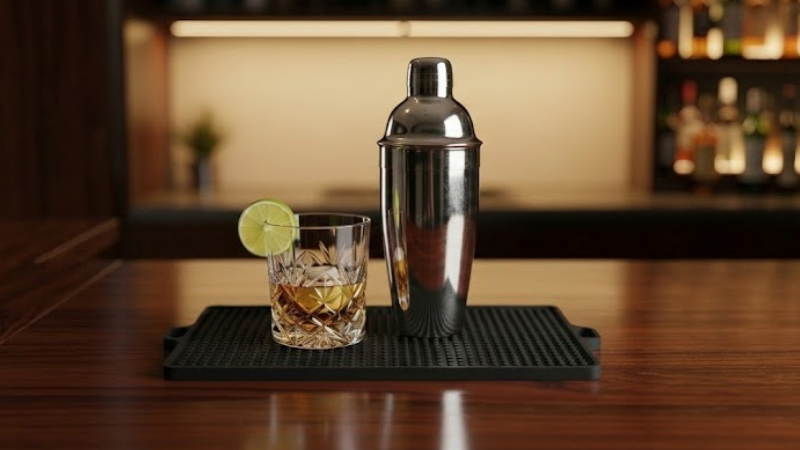
This is the primary use case. A silicone bar mat defines the mixing zone on your home bar, protects your surface from spirit spills and condensation, and gives glassware a stable non-slip base. It also looks intentional — a mat signals that you’ve thought about your setup, in the way that a chopping board signals a proper kitchen.
Coffee and Espresso Stations
A silicone mat under your espresso machine catches portafilter drips, tamping residue, and the constant small splashes that come with daily coffee prep. Unlike rubber, silicone won’t absorb coffee oils or develop the stale coffee smell that builds up in rubber mats over time. Run it through the dishwasher once a week and it stays fresh.
Quartz and Stone Countertop Protection
Silicone’s heat resistance makes it the best mat material for quartz countertops, where sustained heat from appliances can cause thermal shock or discolouration over time. A food-grade silicone mat placed under a coffee machine or kettle creates an effective thermal barrier that rubber or cork can’t match. We cover this in detail in our guide to protecting quartz countertops from heat and stains.
How to Clean a Silicone Bar Mat
This is where silicone really earns its keep. Cleaning is straightforward:
- Daily: Rinse under warm water, wipe with a cloth, air dry. Takes 30 seconds.
- Weekly deep clean: Place on the top rack of your dishwasher on a normal cycle. The non-porous silicone releases coffee, spirits, and residue without retaining any of it.
- Stubborn stains: A 30-minute soak in warm water with a little white vinegar or dish soap loosens anything the dishwasher missed. Rinse thoroughly and air dry.
The key advantage over rubber: silicone won’t develop that sticky, slightly tacky residue that rubber mats eventually get, no matter how often you clean them. For the full cleaning breakdown by mat material, see our complete guide to cleaning bar mats.
Frequently Asked Questions
Are silicone bar mats better than rubber bar mats?
For home bars and coffee stations, yes — silicone is easier to clean, dishwasher safe, heat-resistant, and non-porous so it won’t absorb odours. Rubber still wins for commercial use where extreme durability and high liquid volume are the priority.
What size silicone bar mat do I need?
For a home bar mixing area, 18″ x 12″ (46cm x 30cm) is the most popular and versatile size. For a coffee station, measure your machine and add 10–15cm on each side. If you’re covering a longer bar or serving area, look for extended runner-style silicone mats at 60cm or longer.
Can silicone bar mats go in the dishwasher?
Yes — top rack, normal cycle. This is one of silicone’s biggest practical advantages over rubber. Most silicone bar mats are rated for repeated dishwasher cycles without warping, cracking, or losing their non-slip properties.
Will a silicone mat scratch my countertop?
No. Food-grade silicone is soft and non-abrasive, making it safe for quartz, marble, granite, timber, and laminate countertops. Its non-slip underside grips without marking.
What’s the difference between a silicone bar mat and a rubber bar mat?
Material, mostly. Silicone is non-porous, heat-resistant to ~230°C, dishwasher safe, and odour-resistant. Rubber is denser and highly durable but absorbs odours over time, can’t go in the dishwasher, and has lower heat tolerance. Both provide non-slip grip and effective spill containment.
Find the Right Silicone Bar Mat for Your Setup
A quality silicone bar mat is one of those purchases you make once and stop thinking about. It does its job quietly — protecting your surfaces, keeping your glassware stable, and making cleanup effortless. If you’re building out a home bar or coffee station, it’s the first accessory worth getting right.